


Next: 3 Kinematics Up: Observations and three-dimensional ionization Previous: 1 Introduction
Integral-field spectra of SuWt 2 were obtained during two observing runs in 2009 May and 2012 August with
the Wide Field Spectrograph (WiFeS; Dopita et al., 2007).
WiFeS is an image-slicing Integral Field Unit (IFU) developed and built for the ANU 2.3-m telescope at the Siding Spring Observatory, feeding a double-beam spectrograph. WiFeS samples 0.5 arcsec along each of twenty five  arcsec
 arcsec slits, which
provides a field-of-view of
arcsec slits, which
provides a field-of-view of  arcsec
 and a spatial resolution element of
arcsec
arcsec and a spatial resolution element of  arcsec
 arcsec (or
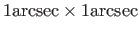 for y-binning=2).
The spectrograph uses volume phase holographic gratings to provide a spectral resolution of
for y-binning=2).
The spectrograph uses volume phase holographic gratings to provide a spectral resolution of  (100 kms
 full width at half-maximum, FWHM),
and
full width at half-maximum, FWHM),
and  (45 kms
FWHM) for the red and blue arms, respectively.
Each grating has a different wavelength coverage.
It can operate two data accumulation modes: classical and nod-and-shuffle (N&S).
The N&S accumulates both object and nearby sky-background data in either equal exposures or unequal exposures.
The complete performance of the WiFeS has been fully described by
Dopita et al. (2007); Dopita et al. (2010).
(45 kms
FWHM) for the red and blue arms, respectively.
Each grating has a different wavelength coverage.
It can operate two data accumulation modes: classical and nod-and-shuffle (N&S).
The N&S accumulates both object and nearby sky-background data in either equal exposures or unequal exposures.
The complete performance of the WiFeS has been fully described by
Dopita et al. (2007); Dopita et al. (2010).
![\includegraphics[width=3.3in]{figures/fig1.eps}](img71.png)
![\includegraphics[width=1.7in]{figures/fig1_5007_flux.eps}](img72.png) ![\includegraphics[width=1.7in]{figures/fig1_5007_conti.eps}](img73.png)
|
Our observations were carried out with the B3000/R3000 grating combination and the RT560 dichroic using N&S mode in 2012 August; and
the B7000/R7000 grating combination and the RT560 dichroic using the classical mode in 2009 May. This covers
 3300-5900 Å
in the blue channel and
5500-9300 Å
in the red channel.
As summarized in Table 1, we took two different WiFeS exposures from different positions of SuWt 2; see Fig. 1 (top).
The sky field was collected about 1 arcmin away from the object.
To reduce and calibrate the data, it is necessary to take the usual bias frames, dome flat-field frames, twilight sky flats, `wire' frames and arc calibration lamp frames.
Although wire, arc, bias and dome flat-field frames were collected during the afternoon prior to observing, arc and bias frames were also taken through the night. Twilight sky flats were taken in the evening.
For flux calibration, we also observed some spectrophotometric standard stars.
3300-5900 Å
in the blue channel and
5500-9300 Å
in the red channel.
As summarized in Table 1, we took two different WiFeS exposures from different positions of SuWt 2; see Fig. 1 (top).
The sky field was collected about 1 arcmin away from the object.
To reduce and calibrate the data, it is necessary to take the usual bias frames, dome flat-field frames, twilight sky flats, `wire' frames and arc calibration lamp frames.
Although wire, arc, bias and dome flat-field frames were collected during the afternoon prior to observing, arc and bias frames were also taken through the night. Twilight sky flats were taken in the evening.
For flux calibration, we also observed some spectrophotometric standard stars.
| Field | 1 | 2 |
| Instrument | WiFeS | WiFeS |
| Wavelength Resolution | 
|

|
| Wavelength Range (Å) | 4415-5589, | 3292-5906, |
| 5222-7070 | 5468-9329 | |
| Mode | Classical | N&S |
| Y-Binning | 1 | 2 |
| Object Exposure (s) | 
|

|
| Sky Exposure (s) | - | 
|
| Standard Star | LTT3218 | LTT9491, |
| HD26169 | ||
 correction
 |

|

|
| Airmass | 
|

|
| Position (see Fig.1) | 13:55:46.2 | 13:55:45.5 |
 :22:57.9
 |
:22:50.3 |
|
| Date (UTC) | 16/05/09 | 20/08/12 |
The WiFeS data were reduced using the WIFES pipeline (updated on 2011 November 21), which is based on the Gemini IRAF3 package (version 1.10; IRAF version 2.14.1) developed by the Gemini Observatory for the integral-field spectroscopy.
Each CCD pixel in the WiFeS camera has a slightly different sensitivity, giving pixel-to-pixel variations in the spectral direction. This effect is corrected using the dome flat-field frames taken with a quartz iodine (QI) lamp. Each slitlet is corrected for slit transmission variations using the twilight sky frame taken at the beginning of the night.
The wavelength calibration was performed using Ne-Ar arc exposures taken at the beginning of the night and throughout the night.
For each slitlet the corresponding arc spectrum is extracted, and then wavelength solutions for each slitlet are obtained from the extracted arc lamp spectra using low-order polynomials.
The spatial calibration was accomplished by using so called `wire' frames obtained by diffuse illumination of the coronagraphic aperture with a QI lamp. This procedure locates only the centre of each slitlet, since small spatial distortions by the spectrograph are corrected by the WiFeS cameras.
Each wavelength slice was also corrected for the differential atmospheric refraction by relocating each slice in  and
and  to its correct spatial position.
In the N&S mode, the sky spectra are accumulated in the unused 80 pixel spaces between the adjacent object slices. The sky subtraction is conducted by subtracting the image shifted by 80 pixels from the original image. The cosmic rays and bad pixels were removed from the raw data set prior to sky subtraction using the IRAF task LACOS_IM of the cosmic ray identification procedure of van Dokkum (2001), which is based on a Laplacian edge detection algorithm. However, a few bad pixels and cosmic rays still remained in raw data, and these were manually removed by the IRAF/STSDAS task IMEDIT.
We calibrated the science data to absolute flux units using observations of spectrophotometric standard stars
observed in classical mode (no N&S), so sky regions within the object data cube were used for sky subtraction.
An integrated flux standard spectrum
is created by summing all spectra in
a given aperture.
After manually removing absorption features, an absolute calibration curve is fitted to
the integrated spectrum using third-order polynomials.
The flux calibration curve was then applied to the object data
to convert to an absolute flux scale. The  O I
O I
![$ ] \lambda$](img87.png) 5577Å night sky line was compared in the sky spectra of
the red and blue arms to determine a difference in the flux levels, which was used to scale the blue spectrum of the science data.
Our analysis using different spectrophotometric standard stars (LTT9491 and HD26169) revealed that the spectra at the extreme blue
have an uncertainty of about 30% and are particularly unreliable for faint objects due to the CCD's poor sensitivity in this area.
5577Å night sky line was compared in the sky spectra of
the red and blue arms to determine a difference in the flux levels, which was used to scale the blue spectrum of the science data.
Our analysis using different spectrophotometric standard stars (LTT9491 and HD26169) revealed that the spectra at the extreme blue
have an uncertainty of about 30% and are particularly unreliable for faint objects due to the CCD's poor sensitivity in this area.
Table 2 represents a full list of observed lines and their measured fluxes from different apertures ( arcsec
 arcsec) taken from field 2: (A)
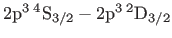
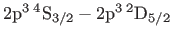
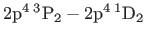
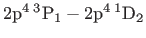
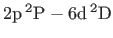
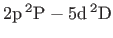
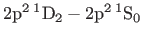
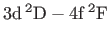
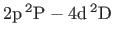
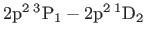
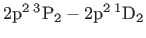
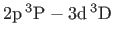
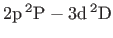
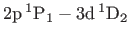
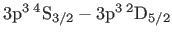
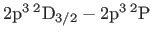
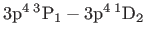
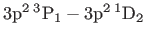
the ring and (B) the inside of the shell. Fig. 1 (bottom panel) shows the location and area of each aperture in the nebula. The top and bottom panels of Fig. 2 show the extracted blue and red spectra after integration over the aperture located on the ring with the strongest lines truncated so the weaker features can be seen. The emission line identification, laboratory wavelength, multiplet number, the transition with the lower- and upper-spectral terms, are given in columns 1-4 of Table 2, respectively.
The observed fluxes of the interior and ring, and the fluxes after correction for interstellar extinction are given in columns 5-8.
Columns 9 and 10 present the integrated and dereddened fluxes after integration over two apertures (A and B). All fluxes are given relative to H
arcsec) taken from field 2: (A)
the ring and (B) the inside of the shell. Fig. 1 (bottom panel) shows the location and area of each aperture in the nebula. The top and bottom panels of Fig. 2 show the extracted blue and red spectra after integration over the aperture located on the ring with the strongest lines truncated so the weaker features can be seen. The emission line identification, laboratory wavelength, multiplet number, the transition with the lower- and upper-spectral terms, are given in columns 1-4 of Table 2, respectively.
The observed fluxes of the interior and ring, and the fluxes after correction for interstellar extinction are given in columns 5-8.
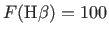
Columns 9 and 10 present the integrated and dereddened fluxes after integration over two apertures (A and B). All fluxes are given relative to H , on a scale where
 .
.
| Region | Interior | Ring | Total | ||||||
| Line |
 (Å)
(Å) |
Mult | Transition |

|

|
|
|
|
|
| (1) | (2) | (3) | (4) | (5) | (6) | (7) | (8) | (9) | (10) |
3726
O II![$ ]$](img3.png)
|
3726.03 | F1 |
|

|

|

|

|

|

|
| 3729
O II
|
3728.82 | F1 |
|
* | * | * | * | * | * |
| 3869
Ne III
|
3868.75 | F1 |
|
128.93:: | 199.42:: | 144.31:: | 195.22:: | 145.82:: | 204.57:: |
| 3967
Ne III
|
3967.46 | F1 |
|
- | - | 15.37:: | 20.26:: | - | - |
4102 H
|
4101.74 | H6 |
|
- | - | 16.19: | 20.55: | 16.97: | 22.15: |
4340 H
|
4340.47 | H5 |
|
24.47:: | 31.10:: | 30.52: | 36.04: | 31.69: | 38.18: |
| 4363
O III
|
4363.21 | F2 |
|
37.02:: | 46.58:: | 5.60 | 6.57 | 5.15 | 6.15 |
| 4686 He II | 4685.68 | 3-4 |
|
80.97 | 87.87 | 29.98 | 31.72 | 41.07 | 43.76 |
| 4861 H
|
4861.33 | H4 |
|
100.00 | 100.00 | 100.00 | 100.00 | 100.00 | 100.00 |
| 4959
O III
|
4958.91 | F1 |
|
390.90 | 373.57 | 173.63 | 168.27 | 224.48 | 216.72 |
| 5007
O III
|
5006.84 | F1 |
|
1347.80 | 1259.76 | 587.22 | 560.37 | 763.00 | 724.02 |
| 5412 He II | 5411.52 | 4-7 |

|
19.33 | 15.01 | 5.12 | 4.30 | 6.90 | 5.68 |
| 5755
N II
|
5754.60 | F3 |
|
7.08: | 4.90: | 13.69 | 10.61 | 10.17 | 7.64 |
| 5876 He I | 5875.66 | V11 |
|
- | - | 11.51 | 8.69 | 8.96 | 6.54 |
| 6548
N II
|
6548.10 | F1 |
|
115.24 | 63.13 | 629.36 | 414.79 | 513.64 | 321.94 |
6563 H
|
6562.77 | H3 |
|
524.16 | 286.00 | 435.14 | 286.00 | 457.70 | 286.00 |
| 6584
N II
|
6583.50 | F1 |
|
458.99 | 249.05 | 1980.47 | 1296.67 | 1642.12 | 1021.68 |
| 6678 He I | 6678.16 | V46 |
|
- | - | 3.30 | 2.12 | 2.68 | 1.63 |
| 6716
S II
|
6716.44 | F2 |
|
60.63 | 31.77 | 131.84 | 84.25 | 116.21 | 70.36 |
| 6731
S II
|
6730.82 | F2 |
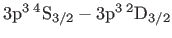
|
30.08 | 15.70 | 90.39 | 57.61 | 76.98 | 46.47 |
| 7005 [Ar V] | 7005.40 | F1 |
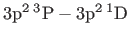
|
5.46: | 2.66: | - | - | - | - |
| 7136
Ar III
|
7135.80 | F1 |
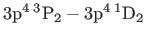
|
31.81 | 15.03 | 26.22 | 15.59 | 27.75 | 15.51 |
| 7320
O II
|
7319.40 | F2 |
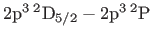
|
18.84 | 8.54 | 9.00 | 5.20 | 10.96 | 5.93 |
| 7330
O II
|
7329.90 | F2 |
|
12.24 | 5.53 | 4.50 | 2.60 | 6.25 | 3.37 |
| 7751
Ar III
|
7751.43 | F1 |
|
46.88 | 19.38 | 10.97 | 5.95 | 19.05 | 9.60 |
| 9069
S III
|
9068.60 | F1 |
|
12.32 | 4.07 | 13.27 | 6.16 | 13.34 | 5.65 |

|
- | 0.822 | - | 0.569 | - | 0.638 | |||
For each spatially resolved emission line profile, we extracted flux intensity, central wavelength (or centroid velocity), and FWHM (or velocity dispersion). Each emission line profile for each spaxel is fitted
to a single Gaussian curve using the MPFIT routine (Markwardt, 2009), an IDL version of the MINPACK-1 FORTRAN code (Moré, 1977), which applies the Levenberg-Marquardt technique to the non-linear least-squares problem.
Flux intensity maps of key emission lines of field 2 are shown in Fig.3 for
O III
 5007, H
6563,
N II
6584 and
S II
6716; the same ring morphology is visible in the
N II
map as seen in Fig.1. White contour lines in the figures depict the distribution of the narrow-band
emission of H
and
N II
taken with the ESO 3.6 m telescope, which can be used to distinguish the borders between the ring structure and the inside region.
We excluded the stellar continuum offset from the final flux maps using MPFIT, so spaxels show only the flux intensities of the nebulae.
5007, H
6563,
N II
6584 and
S II
6716; the same ring morphology is visible in the
N II
map as seen in Fig.1. White contour lines in the figures depict the distribution of the narrow-band
emission of H
and
N II
taken with the ESO 3.6 m telescope, which can be used to distinguish the borders between the ring structure and the inside region.
We excluded the stellar continuum offset from the final flux maps using MPFIT, so spaxels show only the flux intensities of the nebulae.
![\includegraphics[width=6.9in]{figures/fig2_flux_B_1.eps}](img122.png)
![\includegraphics[width=6.9in]{figures/fig2_flux_B_2.eps}](img123.png)
![\includegraphics[width=6.9in]{figures/fig2_flux_R_1.eps}](img124.png)
|
The H
and H
Balmer emission-line fluxes were used to derive the logarithmic extinction at H
,
![$ c({\rm H}\beta)=\log[I({\rm H}\beta)/F({\rm H}\beta)]$](img125.png) , for the theoretical line ratio of the case B recombination (
, for the theoretical line ratio of the case B recombination (
 K and
K and
 cm
cm ; Hummer & Storey, 1987). Each flux at the central wavelength was corrected for reddening using the logarithmic extinction
according to
; Hummer & Storey, 1987). Each flux at the central wavelength was corrected for reddening using the logarithmic extinction
according to
and
are the observed and intrinsic line flux, respectively, and
 is the standard Galactic
extinction law for a total-to-selective extinction ratio of
is the standard Galactic
extinction law for a total-to-selective extinction ratio of
 (Howarth, 1983; Seaton, 1979a; Seaton, 1979b).
![\includegraphics[width=1.75in]{figures/fig7_5007_flux.eps}](img130.png) ![\includegraphics[width=1.75in]{figures/fig7_6563_flux.eps}](img131.png) ![\includegraphics[width=1.75in]{figures/fig7_6584_flux.eps}](img132.png) ![\includegraphics[width=1.75in]{figures/fig7_6716_flux.eps}](img133.png)
|
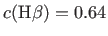
Accordingly, we obtained an extinction of
 [
[
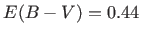 ] for the total fluxes (column 9 in Table 2). Our derived nebular extinction is in good agreement with the value found by Exter et al. (2010),
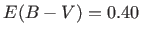 for the central star, though they obtained
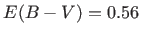 for the nebula. It may point to the fact that all reddening is not due to the interstellar medium (ISM), and there is some dust contribution in the nebula.
Adopting a total observed flux value of log
for the nebula. It may point to the fact that all reddening is not due to the interstellar medium (ISM), and there is some dust contribution in the nebula.
Adopting a total observed flux value of log (H
)=
(H
)= ergcm
ergcm s
for the ring and interior structure (Frew et al., 2013b; Frew et al., 2013a; Frew, 2008) and using
, lead to the dereddened H
flux of log
s
for the ring and interior structure (Frew et al., 2013b; Frew et al., 2013a; Frew, 2008) and using
, lead to the dereddened H
flux of log (H
)=
(H
)= ergcm
s
.
ergcm
s
.
According to the strength of He II
4686 relative to H
, the PN SuWt 2 is classified as the intermediate excitation class with
 (Dopita & Meatheringham, 1990) or
 (Reid & Parker, 2010). The EC is an indicator of the central star effective temperature (Reid & Parker, 2010; Dopita & Meatheringham, 1991). Using the
 -EC relation of Magellanic Cloud PNe found by Dopita & Meatheringham (1991), we estimate
 kK for
. However, we get
kK for
. However, we get
 kK for
according to the transformation given by Reid & Parker (2010) for Large Magellanic Cloud PNe.
kK for
according to the transformation given by Reid & Parker (2010) for Large Magellanic Cloud PNe.
![$\displaystyle I(\lambda)=F(\lambda) 10^{c({\rm H}\beta)[1+f(\lambda)]}, %
$](img127.png)
